Serengeti Night Game Drive: Where It's Legal and What You'll See

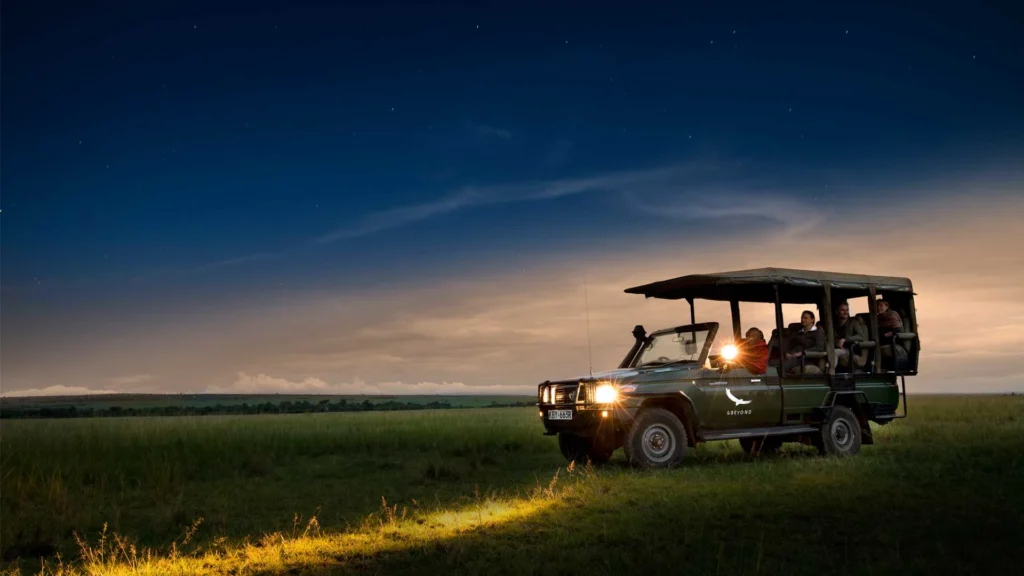
A safari vehicle using spotlights on a thrilling serengeti night game drive.
Experience the mystery of the African savanna after dark with a serengeti night game drive.

Summary: Here’s the short answer most guides bury: you can’t do a Serengeti night game drive inside the national park itself. Driving after 6pm is banned there to protect the wildlife. To go out after dark you cross onto one of the private concessions ringing the park, Grumeti, Ikoma, Klein’s, Loliondo and a few others, where it’s legal and where a whole different cast of animals comes out. This guide covers where you can do it, what you’ll see, and how it works, before the costs.

The best hours in the bush are the ones most visitors sleep through. After dark the plains hand over to a completely different set of animals, and watching a leopard hunt under a spotlight is something you don’t forget. But there’s a catch that trips up a lot of people planning this, and it’s worth getting straight before you book a thing. So let’s start with the rule nobody tells you until you’ve paid.

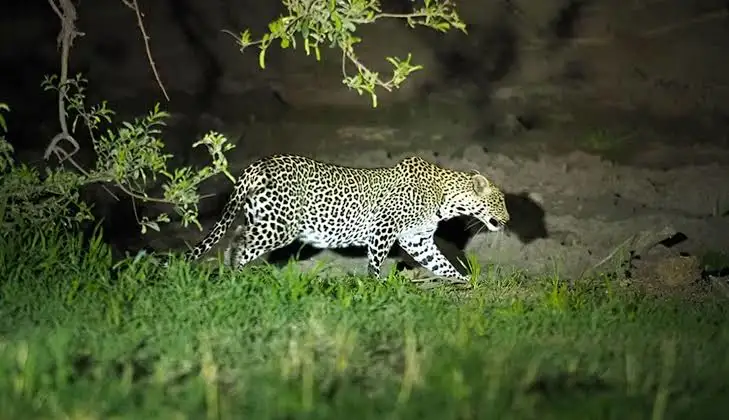
A wild leopard illuminated by a spotlight during a thrilling serengeti night game drive.
An incredible up-close encounter with a leopard hunting under the stars during a serengeti night game drive.

Why You Can’t Do It Inside the Park

Inside the Serengeti National Park, all game driving stops at 6pm. Full stop. The rules set by the MNRT and enforced by TANAPA require every vehicle to be back in camp by dark, and a driver caught out on the tracks after curfew risks a fine and a suspended permit. It isn’t red tape for its own sake. The park becomes a sanctuary at night, so the hunting and the hiding happen without headlights and engines in the mix.

Which is exactly why a night drive has to happen somewhere else.

Where You Actually Can

The land around the park tells a different story. The private concessions and community reserves that ring the Serengeti set their own rules, and most of them allow spotlit driving after dark. The main ones:

  • The Grumeti Reserve, along the western corridor, run by the luxury camps there.
  • The Ikoma area on the northern edge, where more modest camps like Mapito and Ikoma Bush Camp offer it, a rare budget-friendly way in.
  • Klein’s and Loliondo to the north and east, the latter on Maasai-owned land.
  • Maswa and Mwiba down south, quiet and exclusive, out near the Ndutu calving plains.

One more option people miss: the national parks you pass through on the way in, Lake Manyara and Tarangire, both run night drives inside their boundaries. So if your Serengeti camp can’t guarantee one, you can often fold a night drive in at Tarangire instead. Where you stay decides whether this is on the table at all, so flag it before you book.

What It’s Like After Dark

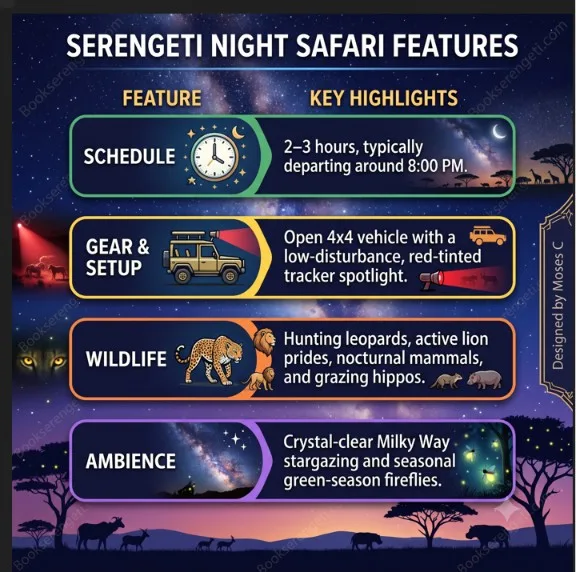
Feature

Key Highlights

Schedule

2–3 hours, typically departing around 8:00 PM.

Gear & Setup

Open 4×4 vehicle with a low-disturbance, red-tinted tracker spotlight.

Wildlife

Hunting leopards, active lion prides, nocturnal mammals, and grazing hippos.

Ambience

Crystal-clear Milky Way stargazing and seasonal green-season fireflies.

Infographic chart explaining Serengeti night safari schedules, gear, nocturnal wildlife, and starry ambience.
Prepare for your nocturnal adventure with this quick guide to Serengeti night safaris.

A night drive runs two to three hours, usually setting off around eight, in an open vehicle with a tracker working a spotlight from the front. A good operator runs a filtered or red-tinted beam rather than raw white light, handled by the tracker, not swung around by everyone, because it disturbs the animals far less.

Then you wait for eyes. The first thing you learn is eye-shine: pinpricks of reflected light out in the dark, and with practice you start reading them, the low gold of a lion, the bright bounce of a hyena. What comes out at night is the whole point. This is prime time for leopard, the classic night hunter, and for lions actually working rather than sleeping off the heat. Around them move the animals you almost never see by day: servals, civets, genets, white-tailed mongooses, porcupines, springhares bouncing off like tiny kangaroos, the odd aardvark, and bushbabies leaping through the branches. Even the hippos change shift, hauling out of the water to graze on land, which is not something to drive up on casually.

And then there’s the sky. With no light for a hundred miles, the stars are absurd, the Milky Way a solid band overhead. Come in the green season and the grass flickers with fireflies while frogs call from every puddle. It’s a different world, and it’s worth losing the sleep for.

The Practical Stuff

A few things to get right:

  • Bring a proper jacket. Not a light fleece, a real windproof one. The wind off a moving vehicle after dark is brutally cold, even after a hot day, and people always underestimate it.
  • Leave the flash in the bag. It’s banned, and rightly, it blinds the very animals you came to watch. For photos, lean on a fast lens and a high ISO under the spotlight instead.
  • Don’t expect a guarantee. Night drives get scrubbed for a muddy track or a vehicle problem more often than camps advertise, so treat it as a bonus, not a fixed booking.
  • Mind the age limit. Most concession camps set a minimum of 12 for night drives, since it’s an open vehicle in unfenced country in the dark. It’s not one for young families.

When to Go

The dry season, June to October, is the easy pick: clear skies, cool nights, and animals concentrated near water where they’re easier to find in the dry-season dark. The green months of November and May trade a little predictability for fireflies, frog song, dramatic skies and far fewer people. Whichever you choose, aim for the nights around a new moon, the darker the sky, the better both the eye-shine and the stars.

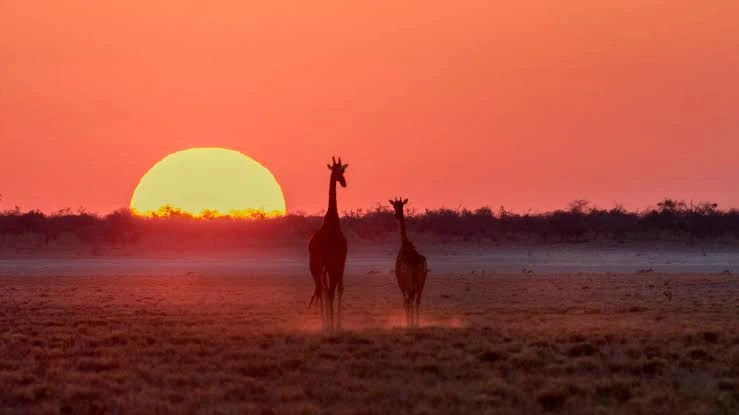
Two giraffes silhouetted against a massive golden sun during a serengeti sunset safari.
A breathtaking view of giraffes strolling across the savanna under a giant sun on a serengeti sunset safari.

One Night I Won’t Forget

Let me tell you how I learned to respect the dark out here. A few seasons back, guiding a group on a concession west of the park, we picked up a set of eyes low in the grass and, against my better judgement, I edged off the firm track to get closer. The clay took us in seconds. Axle-deep, engine straining, going nowhere. Our headlights had picked that night to die on a loose battery lead, and down in that dip the radio couldn’t raise camp.

So we sat. Six hours, tsetse flies for company, until a ranger patrol found us at first light.

The lesson stuck, and I pass it on to every guest since: after dark you stay on the track, no exceptions, and you carry a backup light and a way to call for help that doesn’t hang on a single battery. The bush is unforgiving at night in a way it simply isn’t at noon. Respect that and it rewards you.

What It Costs

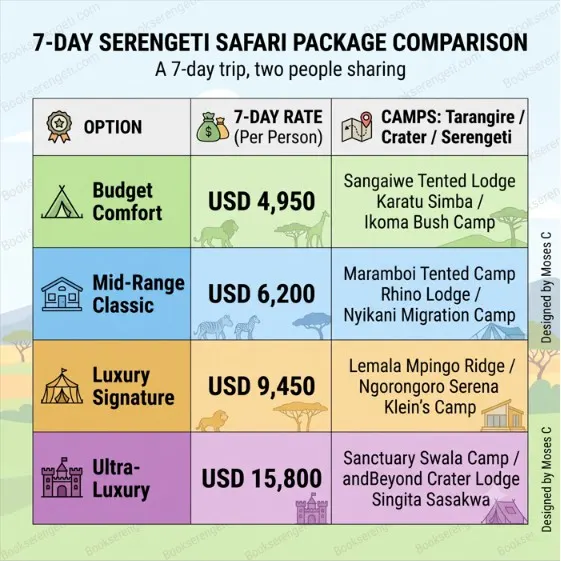
Table comparing 7-day Serengeti safari prices and accommodations across four distinct tier options.
Easily evaluate budget, mid-range, and luxury options for your 7-day Serengeti safari itinerary.

A night drive is usually part of a wider trip built around one of the concession camps. This 7-Day/6-Night route is for two travelling together, with single nights near Tarangire and the Ngorongoro Crater rim on the way in. Non-resident USD per person, valid across 2026/2027.

A 7-day trip, two people sharing

Option

7-day rate (per person)

Camps: Tarangire / Crater / Serengeti

Budget Comfort

USD 4,950

Sangaiwe Tented Lodge / Karatu Simba / Ikoma Bush Camp

Mid-Range Classic

USD 6,200

Maramboi Tented Camp / Rhino Lodge / Nyikani Migration Camp

Luxury Signature

USD 9,450

Lemala Mpingo Ridge / Ngorongoro Serena / Klein’s Camp

Ultra-Luxury

USD 15,800

Sanctuary Swala Camp / andBeyond Crater Lodge / Singita Sasakwa

Here’s what that rate covers:

  • The private 4×4, pop-up roof, high clearance, fridge in the back, fuel, and a licensed driver-guide.
  • All park permits, set by the MNRT and collected by TANAPA, plus the concession’s night-drive fees.
  • Every night’s lodging, meals, and drinking water.
  • The one-way flight from the Seronera airstrip back to Arusha on a carrier like Coastal Aviation.

And what it doesn’t:

  • International flights and visa ($100 on a US passport).
  • Tips (there’s a what-to-tip guide), drinks and laundry.

To route a trip through a camp that runs night drives, share your dates.

Common Questions

Can I do a night drive inside the Serengeti park itself?

No. Driving stops at 6pm inside the national park, by law, to protect the wildlife. Every night drive happens on a bordering concession or reserve, Grumeti, Ikoma, Klein’s, Loliondo and the like, or inside Tarangire or Lake Manyara on the way through.

Are night drives safe for kids?

Most camps set a minimum age of 12. It’s an open vehicle in unfenced country in the dark, so it’s aimed at older children and adults rather than toddlers. Families with little ones are better served by day drives.

What should I wear?

Layers, and warmer than you’d think. A windproof jacket over a fleece, long trousers, and something for your neck, because the wind on a moving vehicle at night gets cold fast. Stick to neutral colours.

Can I use a camera flash?

No, flash is off the table, it blinds nocturnal animals. Shoot with a fast, wide-aperture lens and push your ISO to work with the spotlight instead. You won’t get daylight sharpness, but you’ll get the moment.

Plan a Night Drive

The whole thing comes down to one early decision: base yourself at a camp on a concession that runs night drives, or build one in at Tarangire on the way through. Get that right and the rest is easy. Settle roughly how many days you have and what the wider trip costs, and the route can be shaped around it.

When you’ve got rough dates and a group size, the quote page is the place to start, and your nights out after dark get built into the plan.
Editorial & Fact Check Validation Written by Moses C.Veteran Wildlife Safari Guide & Operations Manager at BookSerengeti.com.