Serengeti Bird Watching: Finding the Specials Across the Northern Circuit
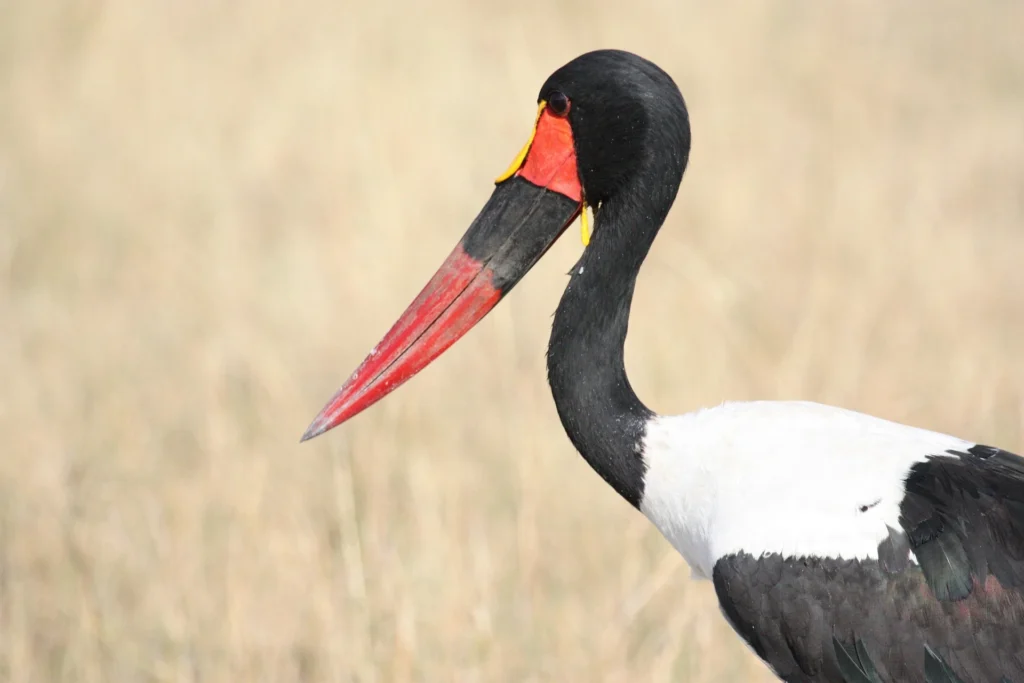
Summary: A Serengeti bird watching guide trip works against the grain of a normal safari: more than 500 species across the northern circuit, from Lake Manyara’s alkaline shore to the acacia grasslands, reward a slow pace rather than the big-cat rush. The prize is the handful of endemics you can’t see anywhere else. For an 11-day private multi-park route built around the best birding habitats, non-resident rates run from about USD 6,150 to USD 16,850 per person sharing.
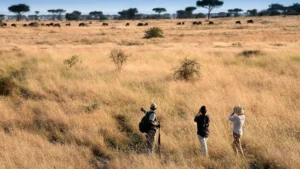
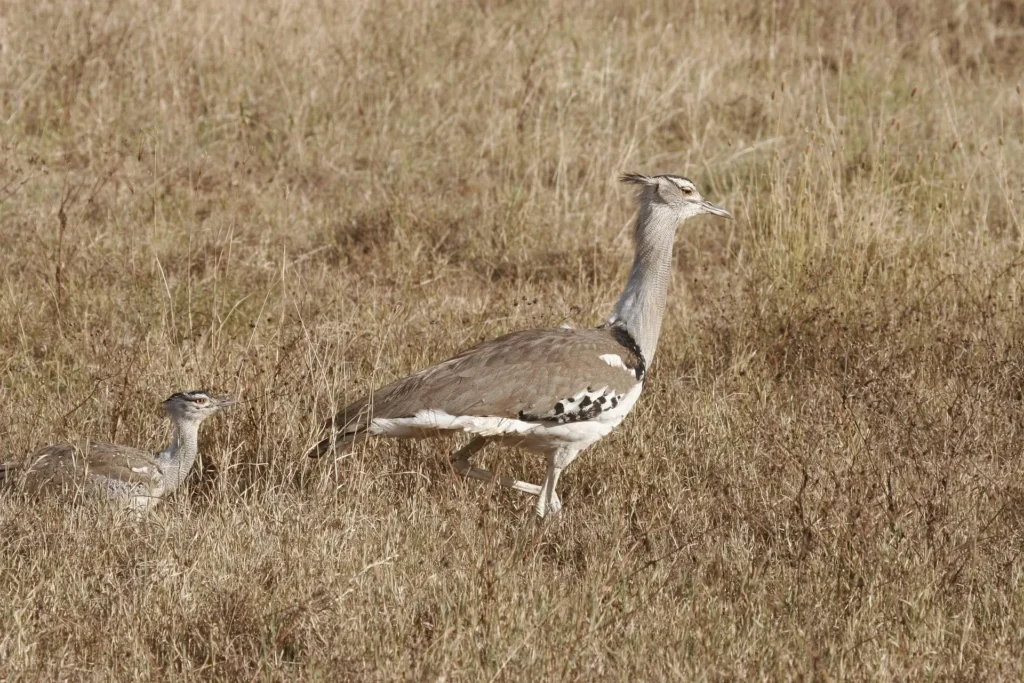
A good birding day runs against the grain of a normal safari. The big-cat circuit is built for speed, twenty vehicles converging on one sleepy lion a mile off, and a birder wants the opposite: a slow pace and a guide who’ll stop for a kingfisher or a grey-breasted spurfowl instead of flooring it toward a radio call.
There’s plenty to stop for. More than 500 species have been recorded here, and at dawn along the rivers you’ll hear the duetting tropical boubous and the cackle of green wood-hoopoes working through the canopy before you’ve laid eyes on a single bird.
Multi-Park Birding Costs
This 11-Day/10-Night route is built for two travelling together: single nights near Tarangire, Lake Manyara and the Ngorongoro Crater rim on the way in to take in their different habitats, then four nights in the core Serengeti and a flexible three-night loop through the western and northern tracking country. Non-resident USD per person, valid across 2026/2027.
11-Day Double-Occupancy Safari Packages
Package Tier | 11-Day Rate (Per Person) | Camps: Tarangire / Manyara / Crater / Serengeti |
USD 6,150 | Sangaiwe Tented Lodge / Farm of Dreams / Karatu Simba / Osinon Camp | |
Mid-Range Classic | USD 7,250 | Maramboi Tented Camp / Kirurumu Manyara / Rhino Lodge / Nyikani Migration Camp |
USD 9,850 | Lemala Mpingo Ridge / Lake Manyara Kilimamoja / Ngorongoro Serena / Melia Serengeti | |
Ultra-Luxury | USD 16,850 | Sanctuary Swala Camp / Manyara luxury lodge / andBeyond Crater Lodge / Four Seasons |
To shift the camps or aim the loop at particular habitats, tell me your dates and I’ll build it around them.
What the price covers
The price takes care of all the park permits and conservation taxes, the private 4×4 (large windows, pop-up roof, high clearance), the fuel, and my time as your guide. It also covers the concession fees for every night inside the park, your meals and bottled water, the double-occupancy lodging, and the one-way flight from the Kogatende or Seronera airstrips back to Arusha on a domestic carrier like Coastal Aviation, bags and taxes included.
What it doesn’t cover is the short, predictable list: your international flights and tourist visa ($100 on a US passport), tips for me and the camp teams, and the personal extras, laundry, drinks at the bar, and your own travel insurance.
National Park Entry Fees
The daily permits are set by the MNRT and collected by TANAPA, with the NCAA running Ngorongoro, charged per adult for each 24-hour stretch inside a park and cashless at the gate. A birding circuit touches more gates than a cat-focused trip: the Serengeti is $82.60 a day ($70 plus 18% VAT), Ngorongoro $70.80, and both Tarangire and Lake Manyara $59 each, with a $295-per-vehicle permit if you drop into the crater. The full fee breakdown has the detail.
Finding the Serengeti Specials
Species | Key Habitat | Birding Tip |
Grey-breasted Spurfowl | Seronera acacia woodlands | Watch riverine tree branches |
Karamoja Apalis | Naabi Hill whistling-thorn | Search ant-gall heavy bushes |
Rufous-tailed Weaver | Open acacia woodlands | Unique endemic weaver species |
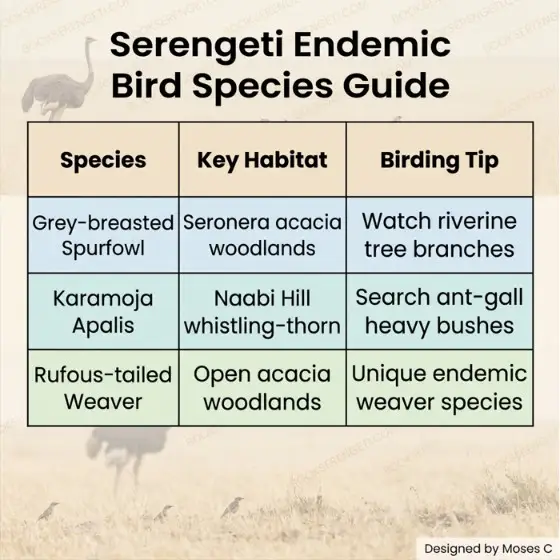
The birds people come this far for are the Serengeti-Mara endemics, the few you can’t tick anywhere else: the grey-breasted spurfowl around Seronera, Fischer’s lovebird and the odd, own-genus rufous-tailed weaver out in the woodland, and the harder pair, the Usambiro barbet and the grey-crested helmet-shrike, which take more looking.
I spend most of my time in the small, specific patches that general drivers roll straight past. The whistling-thorn flats (Acacia drepanolobium) near Naabi Hill Gate hold the tiny Karamoja apalis, and there’s a trick to it: tap a branch and you’ll hear the Crematogaster ants hiss inside the swollen black galls they live in. The apalis feeds on those ants, so the denser the galls, the better your odds, and I just work the cruiser along the gall-heavy bushes.
The other thing I’ll always pull up for is a hamerkop nest on a quiet riverbank. A pair spends months hauling sticks and reeds into a domed structure big enough to take a person’s weight, and once they move on, the side-chambers get taken over by barn owls, monitor lizards or bees. Park near one and you’ll often catch the birds wading the shallows for frogs and small barbel.
Lake Manyara’s Groundwater Forest
The plains get the attention, but for birds Lake Manyara is the most underrated stop on the northern circuit. The gate drops you straight into a groundwater forest, fed by springs running off the rift wall, that stays green all year and shelters silvery-cheeked hornbills and Schalow’s turaco, the turaco giving itself away with a deep barking call and a flash of crimson wing as it crosses between fig clusters. South of there the soda flats hold thousands of lesser flamingos in a long pink band, and a morning along the marsh edges by the hot springs (Maji Moto) turns up long-toed lapwings and glossy ibis feeding in the mud.
Manyara is also one of the few places you can legally bird on foot. It has a shoreline walk and a canopy boardwalk through the forest, and back in the Serengeti the Seronera visitor centre has a short self-guided trail looping a granite kopje, all of them rare chances to get out of the vehicle, which you otherwise can’t do inside the parks.
Gear and Season
Season / Factor | Birding Highlight | Pro Field Strategy |
Nov–Apr (Green Season) | European migrants & breeding plumage | Peak months for species counts |
Midday Thermals | Soaring eagles & secretary birds | Pack full-day lunch to stay out |
Fine Savanna Dust | Protect optics & camera lenses | Keep gear in sealed dry bags |
Two practical notes. The roads up to the Ikoma and Klein’s gates throw fine, flour-like dust, so keep optics in a dry bag and clear them with a blower at the end of the day rather than swapping lenses in an open hatch; the packing list covers the rest. And bring an empty beanbag, because the vehicles don’t carry camera supports unless you ask: the simplest fix is to stop at an Arusha market on day one and fill it with a few kilos of dried maize, which keeps you under the 15 kg flight limit and gives you a steady rest for a long lens.
On timing, the migrants, lesser kestrels hovering over the grass and Eurasian bee-eaters along the brush lines, arrive for the northern winter and are here roughly November to April, the same green months when the residents are in breeding plumage. Counter to what most people expect, the middle of the day is prime for raptors: the thermals that build over the open plains at noon are when martial eagles, bateleurs and secretary birds soar, so I’ll often pack a full-day lunch box and stay out while other trucks have gone in for the afternoon. One last thing, the tsetse in the thick river forest of the western corridor home in on dark blue and black, so wear neutral tan or khaki.
Common Questions
A handful of questions come up with every birding trip, so I’ll get to them here.
When’s the best time for birding?
Roughly November to April. The resident birds are spectacular year-round, but those green months bring the migrants down from Europe and Asia and put the residents into breeding plumage, so the calendar tips well in favour of the wet season for birds, even though the drier months are easier for general game.
Can you actually get out of the vehicle to bird?
Inside the parks, mostly no, you stay in the cruiser, that’s a TANAPA safety rule. The real exceptions are worth planning around, though: the shoreline and canopy walks at Lake Manyara, the short visitor-centre trail in central Serengeti, and a pre-booked ranger walk. Those are where you get to bird on your own two feet.
How far is the drive from Arusha?
About 335 km to Naabi Hill Gate, and more again to reach the central lodges most birding routes run from. It’s a long day on unpaved road, so I’d rather break it than push straight through.
What’s the luggage limit on the small planes?
15 kg, in a soft bag. The cargo holds under a Cessna have narrow doors a hard-shell case simply won’t fit through, and the pilot will leave it on the tarmac, so pack soft and pack light.
Plan Your Birding Safari
A good birding trip comes down to timing it for the migrants, routing through the right habitats rather than just the famous ones, and a guide who’s happy to sit on a thorn bush for ten minutes. Pick your window in the green season, have a think about where you’d like to stay, and what the trip costs run to.
Send me your dates and your group size and I’ll sort the vehicle and the route with you on the quote page. The regional overview and how many days to set aside are useful next reads.
Editorial & Fact Check Validation Written by Moses C. – Veteran Wildlife Safari Guide & Operations Manager at BookSerengeti.com.
Welcome to bookserengeti.com
Thank you for visiting us! We're excited to help you plan an unforgettable safari adventure across Kenya.
Latest Safari Posts
Serengeti Migration Safari Packages: 2026/2027 Cost & Itinerary Guide
Serengeti Wildlife Safari Packages: 2026/2027 Price, Big Five & Routes
Serengeti Group Joining Safari Package: 2026/2027 Price & Route Guide