Ndutu Serengeti Safari: The Calving Season Planning Guide
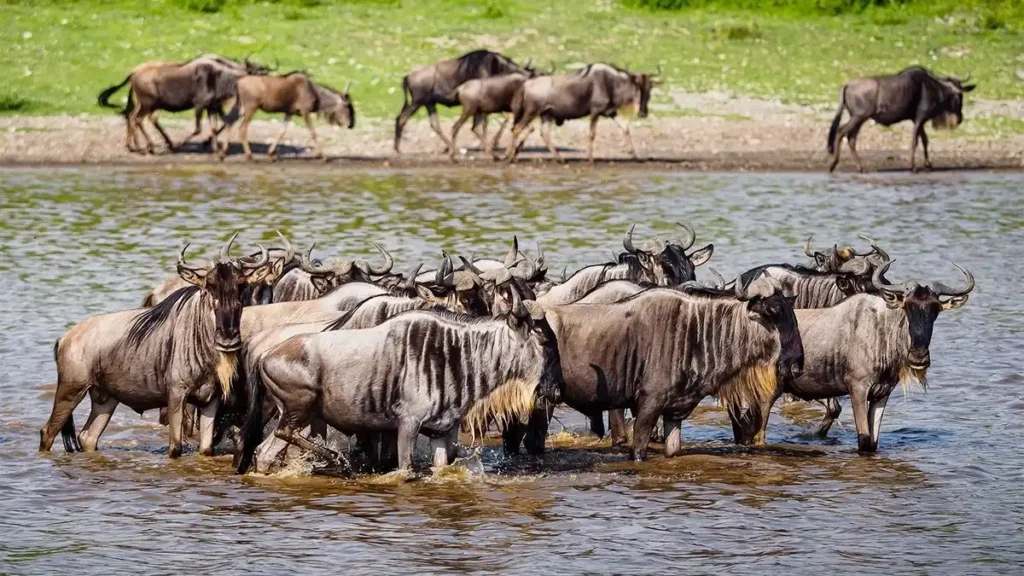
Summary: An Ndutu Serengeti safari is about one thing above all: timing your trip for the Great Migration’s calving season on the southern plains, between January and March. For those few weeks the region turns into a vast natural nursery, with hundreds of thousands of wildebeest dropping calves and every predator for miles drawn in behind them. A typical 8-day, double-occupancy overland trip covering the cross-boundary permits and a fly-back to Arusha runs from about USD 4,590 to USD 9,820 per person sharing.
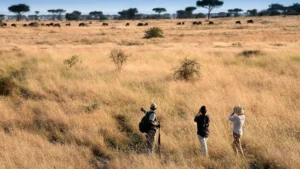
The short-grass plains of the southern Serengeti early in the year are unlike anywhere else in the park. Most booking sites file Ndutu in with the central Serengeti, as if it were the same year-round game drive, but through the calving months it’s a different place altogether: a working wildlife nursery ringed by old acacia woodland and shallow alkaline lakes, with the low grunting of hundreds of thousands of wildebeest cows and their calves carrying across the flats.
Get the lodge or the permits wrong and you can lose your best light sitting in a queue at a park gate. So before the tracking strategy, the costs and the paperwork.
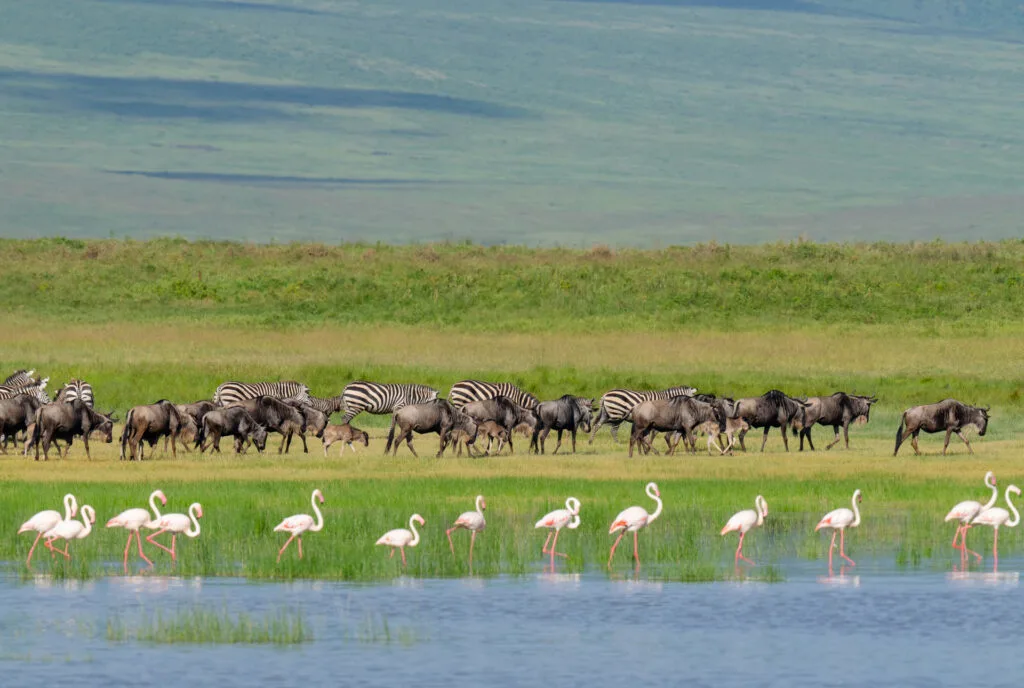
Calving Season Package Comparisons
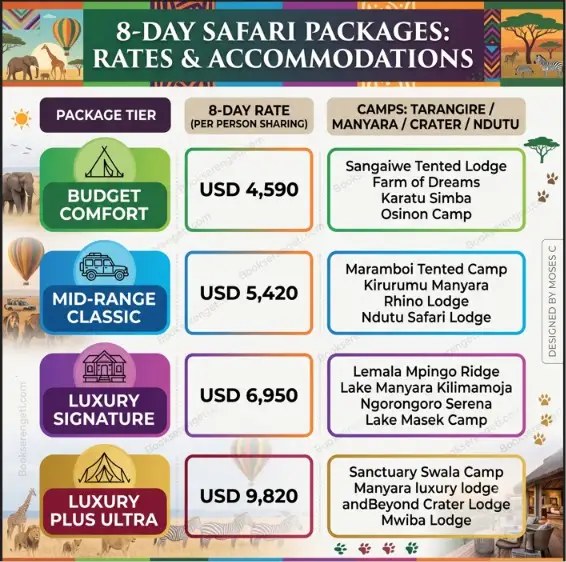
This 8-Day/7-Night route is built for two travelling together in peak calving season: single nights near Tarangire, Lake Manyara and the Ngorongoro Crater on the way in, then four nights on the southern plains. Non-resident USD per person, valid across 2026/2027.
8-Day Double-Occupancy Safari Packages
Package Tier | 8-Day Rate (Per Person Sharing) | Camps: Tarangire / Manyara / Crater / Ndutu |
USD 4,590 | Sangaiwe Tented Lodge / Farm of Dreams / Karatu Simba / Osinon Camp | |
Mid-Range Classic | USD 5,420 | Maramboi Tented Camp / Kirurumu Manyara / Rhino Lodge / Ndutu Safari Lodge |
USD 6,950 | Lemala Mpingo Ridge / Lake Manyara Kilimamoja / Ngorongoro Serena / Lake Masek Camp | |
Luxury Plus Ultra | USD 9,820 | Sanctuary Swala Camp / Manyara luxury lodge / andBeyond Crater Lodge / Mwiba Lodge |
Optional add-on: a sunrise hot air balloon flight over the southern plains, USD 600 per person, including the TANAPA permit, the launch and a champagne breakfast on landing.
You can check dates and tweak the lodges to fit your timeline.
What Fees Are Included
Our rates are all-in for the safari. Here’s what’s covered, what isn’t, and the government charges underneath the price.
What’s covered
- All daily conservation and entry fees for both TANAPA and the NCAA, since Ndutu spans the two.
- Private use of a fitted 4×4 Land Cruiser with heavy-duty suspension, large windows and a pop-up roof hatch.
- Full fuel allowance and a professional driver-guide every day.
- Concession fees for every night spent inside park boundaries.
- All meals, cold water in the vehicle fridge, and your room on a shared-double basis.
- The one-way flight from the Ndutu airstrip back to Arusha, luggage and taxes included.
What’s not
- International flights and your tourist visa ($100 for US citizens).
- Tips for your guide and lodge staff.
- Laundry, premium drinks at the bar, and travel insurance.
The park fees behind the price
Tanzania’s park charges are set by the MNRT, per adult per day with the 18% VAT already in:
- Serengeti entry: USD 82.60 per adult / day.
- Ngorongoro (NCA) entry: USD 70.80 per adult / day.
- Inner-park lodge concession: USD 59 to 60 per adult / night.
Because the calving plains straddle the Serengeti and the Ngorongoro Conservation Area, an Ndutu trip usually carries fees for both, which is the single biggest reason the budgeting here trips people up.
Mobile camp or permanent lodge?
Ndutu forces a choice the rest of the park doesn’t. The seasonal mobile camps strike their canvas and pack out for most of the year, then re-pitch for the December-to-March window right in the path of the herds, so you’re often minutes from the action and falling asleep to it; the trade-off is canvas walls and simpler power. The historic permanent lodges like Ndutu Safari Lodge stay put year-round, with solid walls, resident wildlife around the verandah and more comfort, but they’re fixed where they stand rather than moving with the calving.
Why the Calving Happens Here
The southern plains owe their pull to old volcanic ash off the highlands, which leaves the soil heavy in phosphorus and calcium. That feeds a short grass rich in exactly the minerals a pregnant or nursing wildebeest needs, and it’s why the herds come back to these same plains to drop their calves year after year.
The timing is the clever part. Almost all of the roughly 500,000 births land inside the same three-to-four-week window, usually peaking in February at something like 8,000 calves a day, and that synchrony is no accident. By calving all at once, the wildebeest swamp the predators: there are simply more newborns than every lion, cheetah and hyena on the plains could hope to eat, so the great majority slip through. A cow calving alone in the off-season would likely lose her calf within the hour; calving in the same fortnight as everyone else, her odds flip. The calves help their own cause too, standing within a few minutes of birth and running with the herd inside half an hour. It’s also why the predator action is so relentless while it lasts, with lion prides and cheetah working the edges of the herds all day.
How the three months differ
Month | Herd Status | Key Wildlife Event |
January | Arrival on the plains | First scattered calves drop |
February | Peak of the season | 8,000+ births daily & maximum hunting |
March | Departure begins | Stronger calves drift toward Western Corridor |
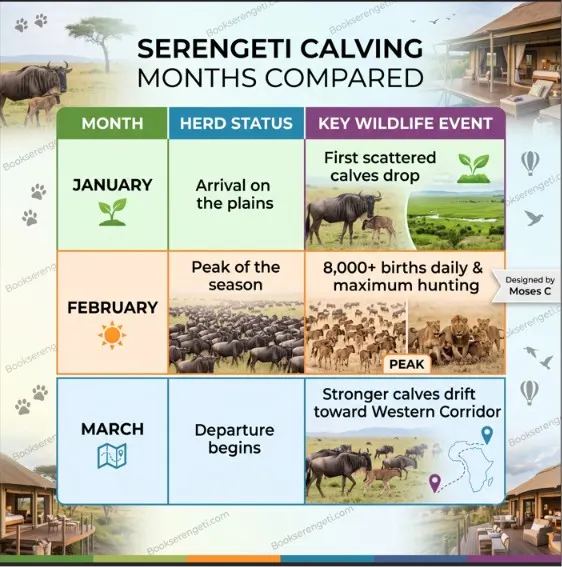
The window isn’t interchangeable, and where these weeks fall in the wider migration year is worth knowing if you’re fixing flight dates.
- January is the arrival. The herds spill down from the central valley, the short rains green the plains, and the first scattered calves drop.
- February is the peak, the epicentre of both the births and the hunting, and the month to aim for if you want the full spectacle.
- March is the turn. The calves are stronger, the short grass is grazing down, and the herds start drifting back toward the central Serengeti and on toward the western corridor.
Two more things worth knowing on the ground. The nights are loud in their own way: tree hyraxes nesting in the acacia bark let out an eerie, rising scream right outside the permanent lodges. And after an afternoon shower the soda lakes throw up thick clouds of lake midges and stable flies, which don’t bite but will mob your lenses, so keep the roof hatch down near the lakeshore.
Crossing the Park Boundary
The fiddliest part of an Ndutu Serengeti safari is the invisible border running through it. The calving grounds fall across both the Serengeti National Park, run by TANAPA, and the Ngorongoro Conservation Area, run by the NCAA, with no fence between them, just the odd concrete marker lost in the grass. The herds cross back and forth all day depending on where the rain falls, but your vehicle permits don’t follow automatically.
If an operator has only cleared one zone and you chase a sighting across the line, you can be stopped and fined, and your afternoon vanishes into a checkpoint while someone tries to settle it on a weak signal. It’s entirely avoidable: an operator who arranges both permits in advance lets your guide follow a cheetah across that line without a second thought. On our trips the calving season permits and tracking codes are cleared days before you land.
Both permits, sorted before you arrive, are the difference between following a hunt across the boundary and sitting at a gate office.
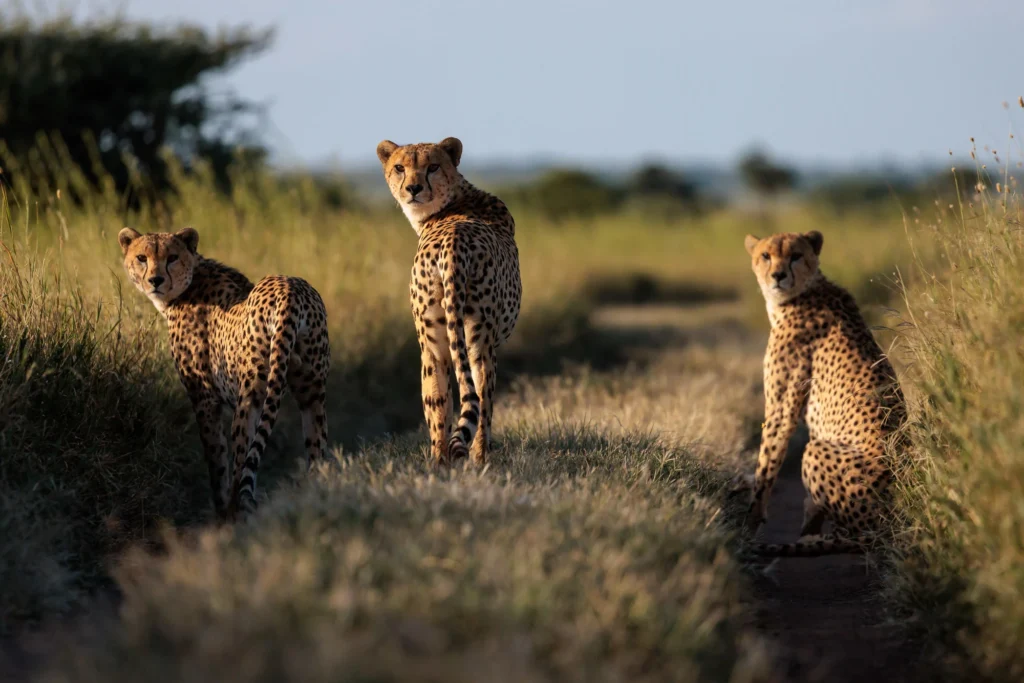
Driving Conditions and Kit
Ndutu rewards a guide who knows the soil. The tracks through the acacia woodland near Lake Ndutu are firm volcanic ash, but the open plains around the marsh loops are black-cotton clay, and there’s a real difference between them once it rains.
A short afternoon downpour turns that clay to slick mud in minutes. The surface can look dry and sun-baked while a deep layer of muck sits underneath, and it will hold a heavy 4×4 fast. Self-drivers pull off the tracks to get nearer the elephants by the marsh and sink to their axles doing it; recoveries out here eat hours. It’s one of the better arguments for a guide who reads the ground rather than the map.
For kit, the one Ndutu-specific thing is glare. The white soda flats throw back hard light, so polarised sunglasses earn their place here more than almost anywhere, and they cut the surface shine off the lakes for photography too. Beyond that, the standard packing list covers you.
Calving Season Planning FAQ
How far is it from Arusha to the Ndutu plains?
About 335 km (208 miles) to Naabi Hill Gate, then 5.5 to 6 hours of unpaved road through to the core Ndutu area. Most itineraries break the drive with a night near Tarangire or in the Karatu highlands.
Can you reach the calving grounds in a single afternoon?
No. It’s too long and too rough to do safely in an afternoon, so we split the transit over a few days.
How strict are the baggage limits on the bush flights?
Strict: 15 kg (33 lbs) in a soft duffel. The cargo pods on a Cessna Caravan have narrow doors that a hard roller case won’t pass, and it’ll be left on the tarmac. These legs usually run up to USD 450 per person including local strip taxes.
What if the green-season rains arrive late?
Then the herds hang back in the central valley until the new grass comes through, and calve a little later than usual. A good operator stays in radio contact with bush pilots and other guides to track where the herds have actually settled, so you still find them.
Calving Season or River Crossings?
A lot of people planning their one big trip are really choosing between two very different faces of the same migration, so it’s worth being clear about each.
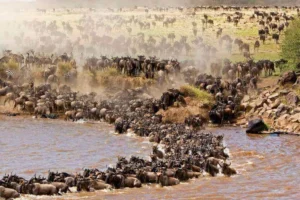
The Mara River crossings up north, roughly July to September, are the dramatic version: dust, panic, crocodiles and thousands of animals piling down a bank in the survival lottery. It’s spectacular, but it’s a waiting game, often long hours for a few violent minutes, on dry, tawny northern plains.
The Ndutu calving, January to March, is the other register entirely: green, lush, intimate and constant. Rather than one big set-piece you get wall-to-wall density, newborns in every direction, and predators working the herds all day at close range, on a slower and more photographic kind of safari. If it’s raw drama you want, and you don’t mind a long hot wait for it, the northern crossings are the trip; the calving is the one to pick if you’d rather be surrounded by sheer numbers and shooting in soft green light. The migration as a whole shows how the two ends of the year connect.
Send us your travel window on the quote page and we’ll line up the dates, the camps and the fly-back around the calving. If you’re still putting the numbers together, the full cost breakdown shows where it all goes, and the southern Serengeti page sets Ndutu in its wider region.
Editorial & Fact Check Validation Reviewed by Moses C. – Veteran Wildlife Safari Guide & Operations Manager at BookSerengeti.com.
Welcome to bookserengeti.com
Thank you for visiting us! We're excited to help you plan an unforgettable safari adventure across Kenya.
Latest Safari Posts
Serengeti Migration Safari Packages: 2026/2027 Cost & Itinerary Guide
Serengeti Wildlife Safari Packages: 2026/2027 Price, Big Five & Routes
Serengeti Group Joining Safari Package: 2026/2027 Price & Route Guide